

RNA Sequencing FAQs
RNA-Seq FAQs
What is RNA sequencing (RNA-Seq)?
RNA-Seq is a method for transcriptome profiling that uses next generation sequencing technologies. RNA-Seq provides a comprehensive, quantitative, and unbiased view of RNA sequences within every sample, and is the most powerful tool currently available for analyzing gene expression.
For more information, download our eBook A Guide to RNA-Seq or read our blog Which RNA-Seq Technique Should I Use?
What are the differences between the service packages?
The packages differ in price and turnaround time:
- Value is the most economical option to help projects come under budget
- Preferred offers a balance of speed and cost, leveraging our optimized processes for quick results without breaking the bank
- Express helps meet tight deadlines with industry-leading turnaround times
- Lightning provides results at lightning speed for select library options
The package type can be revised after receiving your initial quote.
Note: Service packages may not be available for all services (e.g. EZ services), projects, or institutions. Please inquire if an expedited solution is required for an exempt service.
Do you offer RIP-Seq (RNA immunoprecipitation with sequencing)?
We can accept immunoprecipitated RNA for our ultra-low input RNA-Seq service. Please note that we do not perform the immunoprecipitation step.
How does Single-Cell RNA-Seq differ from Standard and Ultra-Low Input RNA-Seq?
Standard RNA-Seq produces a representative snapshot of the transcriptional state averaged across all cells. The caveat with traditional RNA-Seq is the resolution of individual cells and cellular subpopulations are lost. Single-Cell RNA-Seq allows researchers to not only identify cellular subpopulations, but to fully interrogate them at the single-cell level within a heterogeneous sample.
Like Standard RNA-Seq, Ultra-Low Input RNA-Seq provides bulk expression analysis of the entire cell population; however, as the name implies, a very limited amount of starting material is used, as low as 10 pg or a few cells. Single-Cell RNA-Seq requires at least 50,000 cells (1 million is recommended) as an input.
For more information, please read our blog posts:
How does Illumina-based RNA-Seq compare to Iso-Seq/Kinnex Full-Length RNA on PacBio?
Generally, Iso-Seq/Kinnex Full-Length RNA sequencing is superior to Illumina approaches when qualitative endpoints are of interest, such as alternative splicing, alternative polyadenylation, genome annotation, and novel transcript detection. For quantitative assessment (e.g. expression of transcript A vs B in one sample, or expression of transcript C in sample 1 vs sample 2), short-read approaches are recommended due to the greater number of reads that can be obtained.
What is the price for RNA-Seq?
Please submit a quote request to receive accurate pricing information, as the cost depends on the details of the project. You can also contact the team by submitting an inquiry.
For a quick tutorial, watch our step-by-step instructions.
Technical Details
What are the technical details of your RNA-Seq services?
Please download our Technical Specifications Sheet for a summary of our Standard, Strand-Specific, Small, and Ultra-Low Input RNA-Seq services. Visit the following pages for more information about Single-Cell RNA-Seq and Iso-Seq/Kinnex Full-Length RNA.
What sequencing platforms are used for RNA-Seq?
Standard, Strand-Specific, Single-Cell, Small, and Ultra-Low Input RNA-Seq use short-read sequencing on Illumina® platforms. Iso-Seq/Kinnex Full-Length RNA uses long-read sequencing on the PacBio® platforms.
For more information, visit our NGS Platforms webpage.
What starting materials are accepted?
The most common starting material is extracted total RNA. However, we have extensive experience performing extractions from a wide variety of materials, including cell pellets, fresh frozen tissue, blood, and FFPE slides. We also accept sorted cells for Ultra-Low Input RNA-Seq. Read our Sample Submission Guidelines for more information.
What method is used to remove ribosomal RNA (rRNA)?
Since ribosomal RNA (rRNA) makes up most of the total RNA, its removal is necessary for efficient sequencing of other RNA species, such as mRNA, long non-coding RNA (lncRNA), and small RNA.
- For Standard and Strand-Specific RNA-Seq, you can select either poly-A selection or rRNA depletion methods. Poly-A selection is sufficient for studying mRNA in eukaryotes. Analysis of lncRNA or bacterial transcripts requires rRNA depletion.
- For Ultra-Low Input RNA-Seq, the default is to use poly-A selection. However, if your project requires analysis of lncRNA in addition to mRNA, please make a comment on the quote request form, and we can discuss the available options.
What RNA-Seq method is recommended for FFPE samples?
Due to the anticipated poor quality and integrity of FFPE samples, we recommend using a library preparation with rRNA depletion or a targeted RNA exome library preparation (if applicable).
What RNA-Seq method is recommended for blood samples?
We recommend using a library preparation with rRNA depletion and globin depletion to improve the detection of low-expression transcripts.
Can you analyze small RNA or miRNA?
Yes, within your GENEWIZ account, select our Small RNA-Seq service. Please note that our library preparation for Small RNA-Seq uses kits that specifically recognize the 5’ and 3’ ends of RNA after processing by DICER. A different library preparation method is used for Standard RNA-Seq projects for analysis of mRNA and lncRNA.
Can you prepare small and standard RNA libraries from the same total RNA preparation?
Yes, if enough input material is provided and the total RNA preparation contains small RNAs. Since Standard RNA-Seq and Small RNA-Seq use different library preparation methods, the total RNA sample must be split.
When should UMIs be included and what method is used during library preparation?
ERCC stands for the External RNA Controls Consortium. The ERCC is a group of researchers and organizations that have developed a set of synthetic RNA molecules to standardize RNA quantification in gene expression profiling. The use of ERCC spike-ins can help standardize RNA quantification across different experiments. Using the read counts of the ERCC controls, researchers can determine the sensitivity (i.e., the limit of detection), dynamic range, linearity, and accuracy of an RNA-Seq experiment. They can also control technical variations between runs.
When requested, GENEWIZ will use ERCC Spike-in Mix. The ERCC spike-in mix contains 92 transcripts of known concentration. The set is organized into four subgroups, each containing 23 controls that span six logs of dynamic range in concentration. Unless otherwise requested, spike-in across samples will be performed in a checkerboard pattern (assuming at least 1 sample between).
We do not recommend utilizing ERCC spike-in on samples of low concentration.
When should ERCC spike-in be added and what spike-in is used?
Libraries usually undergo PCR amplification to boost the number of low-abundance transcripts in the sample, increasing the chances they’ll be read during sequencing. However, PCR does not copy DNA with perfect fidelity; it’s usually biased, as some molecules in a library are amplified more efficiently than others. PCR can also introduce errors, or mutations, when making copies. As a result, the sequencing data may not accurately represent the original population of RNA molecules. In other words, the relative abundance of reads differs from that of the input RNA.
UMIs can correct the bias and errors caused by PCR amplification. By tagging the original cDNA molecule with a UMI, all its PCR copies will carry the same barcode. We recommend using UMIs with deep sequencing (>50 million reads/sample) or samples with low-input for library preparation.
How many reads do I need for my experiment?
The number of reads required depends upon the genome size, the number of known genes, and transcripts. Generally, we recommend 5-10 million reads per sample for small genomes (e.g. bacteria) and 20-30 million reads per sample for large genomes (e.g. human, mouse). Medium genomes often depend on the project, but we would generally recommend between 15-20 million reads per sample. For de novo transcriptome assembly projects, we recommend 100 million reads per sample.
How does your Poly-A RNA-Seq workflow deliver data quickly?
Our streamlined Poly-A RNA-Seq workflow is designed for fast, high-volume processing. To minimize turnaround time, we perform quality control and library preparation in a continuous, automated pipeline. Your samples will proceed directly to library preparation. Alongside standard nucleic acid QC (including Qubit quantification and of RNA integrity assessment), we conduct a functional QC by processing an aliquot through Poly-A enrichment and RNA-seq library creation. Libraries that meet our predefined quality standards are sequenced automatically. If samples produce libraries that meet predefined quality standards, they are sequenced automatically. Libraries that do not meet quality thresholds are flagged, and our team will contact you to discuss next steps before sequencing proceeds.
Data Analysis
What bioinformatics services are available for RNA-Seq projects?
We provide raw data as FASTQ files for all projects. We also have advanced bioinformatics capabilities to provide optional data analysis services, including:
- Standard RNA Analysis Package: mapping, differential gene expression, alternative splicing, and gene ontology analysis
- Gene fusion discovery
- SNP/INDEL detection
- Novel transcript discovery
- De novo transcriptome assembly for sequences that do not have a reference
- Custom analysis
View our demo bioinformatics report.
What species are compatible with the gene ontology analysis pipeline?
GENEWIZ can perform gene ontology analysis on the species in the following Github link. If the species is not listed, we reserve the right to remove gene ontology analysis from the project at the client’s discretion.
Can GENEWIZ perform multiple comparative analyses for different gene expression analysis?
Yes, multiple comparative analyses can be performed. Depending on the complexity and number of comparisons, additional charges may apply and would be communicated prior to the work being performed.
How do I use UMIs to de-duplicate data for my RNA-Seq experiment?
We use the Twist UMI system by default. UMIs are sequenced in-line and each pair of reads is structured as 5bp UMI + 2bp spacer + subsequent read sequence:
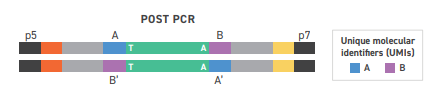
For UMI extraction together with quality/adapter trimming, we recommend using the fastp tool found here: https://github.com/OpenGene/fastp. Please download and install the tool before proceeding. Detailed instructions on how to process your data with UMIs can be found on the git page under session ‘unique molecular identifier (UMI) processing’ and the corresponding example.
UMI extraction will be enabled with the -U or –umi option in the command line.
For UMI deduplication, it can be performed in a one-line command together with the previous step by enabling deduplication in fastp (specifically -D or –dedup).
After trimming and deduplication, the resulting reads can be aligned to your reference genome. You can also proceed with downstream analysis including hit count calculation as normal.
The raw reads we provide can also be processed with other UMI extraction and deduplication tools such as umis tool and umi-tools, depending on your preference. The processing order will be different compared to fastp, as the deduplication step will need to be performed after UMI extraction, trimming, and alignment. More details can be found in the user instructions for the umis tool (https://github.com/vals/umis) and umi-tools (https://umi-tools.readthedocs.io/en/latest/index.html).
Single-Cell RNA-Seq FAQs
What is single-cell RNA sequencing (RNA-Seq)?
Single-cell RNA-Seq provides transcriptional profiling of thousands of individual cells. This level of throughput analysis enables researchers to understand at the single-cell level what genes are expressed, in what quantities, and how they differ across thousands of cells within a heterogeneous sample.
The workflow for single-cell RNA-Seq is outlined below. Isolated cells are frozen by the customer according to GENEWIZ cryopreservation protocol and shipped overnight. At GENEWIZ, cell viability is assessed and, if necessary, dead cell removal may be performed (see below for more information). Cells are then processed by the 10x Genomics® Chromium™ X Controller to create single-cell libraries. The libraries are then pooled and sequenced on the Illumina® platform.
Within the Chromium X Controller, cells are loaded onto a microfluidic chip and encapsulated within droplets containing barcoded gel beads and reagents for reverse transcription. Following cell lysis, the beads capture the poly(A) tails of the mRNA molecules. Reverse transcription generates cDNA tagged with a 10x barcode to identify the cell and a unique molecular identifier (UMI) to label the mRNA transcript. The pooled cDNA is amplified in bulk, and Illumina adapters, including a sample index, are added to the fragments to generate sequencing libraries.
Read our article How Single-Cell Sequencing Works for more information.
How does single-cell RNA-Seq differ from standard and ultra-low input RNA-Seq?
Standard RNA-Seq produces a representative snapshot of the transcriptional state averaged across all cells. The caveat with traditional RNA-Seq is the resolution of individual cells and cellular subpopulations are lost. Single-cell RNA-Seq allows researchers to not only identify cellular subpopulations, but to fully interrogate them at the single-cell level within a heterogeneous sample.
Like standard RNA-Seq, ultra-low input RNA-Seq provides bulk expression analysis of the entire cell population; however, as the name implies, a very limited amount of starting material is used, as low as 10 pg or a few cells. Single-cell RNA-Seq requires at least 50,000 cells (1 million is recommended) as an input. See the Sample Preparation section below for more information about sample submission guidelines.
Read our article Top 3 Factors to Consider Before Starting a Single-Cell Sequencing Project to learn if single-cell sequencing is the right NGS approach for your experiment.
What is your sample processing workflow?
Our sample processing workflow is illustrated here.
Viability and cell counts are measured immediately upon sample receipt. To ensure the highest quality data, cells must be processed on the 10x Genomics® Chromium™ system as soon as possible. As such, we developed a predefined workflow when samples do not pass initial QC for viability or cell count. Please refer to the workflow linked above for more information.
Which single-cell assays do you offer?
In addition to standard 3’ and 5’ Single-Cell RNA-Seq, we offer Immuno-Seq, Feature Barcoding/CITE-Seq, Flex Fixed RNA, ATAC-Seq, and Multiome (RNA-Seq + ATAC-Seq). We also offer Regulated Single-Cell processing for all services listed in our GCP-compliant, CAP-accredited and CLIA-certified laboratory environment for clinical applications.
What is the price for single-cell RNA-Seq?
Please submit a quote request to receive accurate pricing information, as the cost depends on the details of the project.
.png)
You can also contact the NGS team by submitting an inquiry.
Technical Details
How do dead cells impact data quality?
Low cell viability causes unreliable cell recovery in the Chromium™ system and typically leads to missed sequencing targets and suboptimal results. Furthermore, ambient RNA released by dead or apoptotic cells increases background noise, compromising data quality. To maximize the amount of useful sequencing data in single-cell projects, the fraction of dead cells must be minimized. We recommend that cell viability exceeds 90%, with a minimum of 70%. Samples with less than 70% viability may undergo dead cell removal (DCR). A minimum of 106 cells and no previous treatment with magnetic beads is required for DCR.
Please refer to our workflow for more information.
How does dead cell removal work?
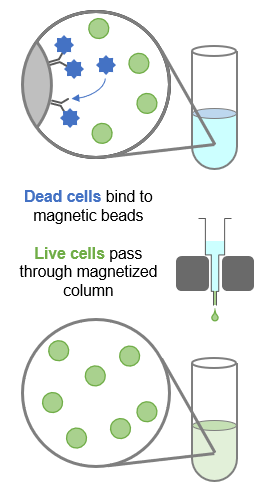
Dead cell removal (DCR) uses magnetic beads conjugated to antibodies against annexin V, a marker for dead and apoptotic cells (see image below). The beads capture dead or dying cells, enriching the sample for live cells.
How many cells can be sequenced per sample on the Chromium™ X Controller?
Revealing the full diversity of gene expression across a tissue or cell population often requires analysis of hundreds to thousands of viable cells. With our single-cell workflows, researchers have the flexibility to specify the number of cells to be sequenced, from 500 to 20,000 cells per sample. We typically recommend targeting 5,000-6,000 cells per sample for most experiments.
How many reads do I need for my experiment?
The number of reads required depends upon the genome size, the number of known genes, cell type, and transcripts. Generally, we recommend 50,000 reads per cell to maximize the identification of transcripts.
What starting materials are accepted?
We support a wide range of starting materials (including cryopreserved cells, isolated nuclei, fresh or fixed cells, and tissue samples) to meet the diverse needs of your single-cell research. For added convenience, we also offer optional nuclei isolation and tissue dissociation services for an additional fee.
For detailed sample submission requirements, please visit our sample submission guidelines.
Data Analysis
What type of data analysis is available for single-cell RNA-Seq?
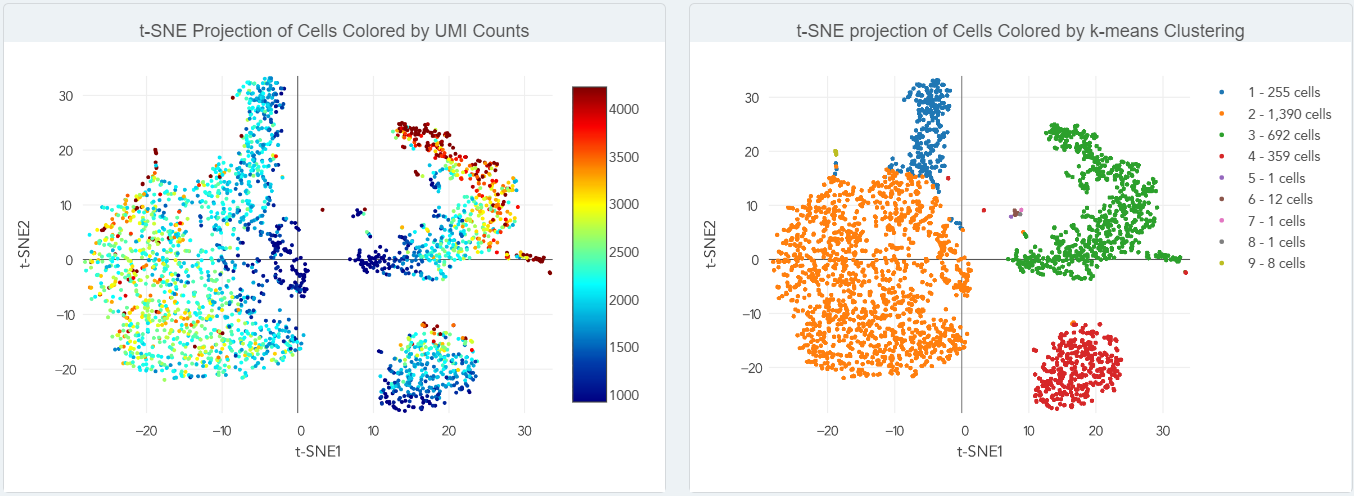
Here is a sample report. We use Cell Ranger software from 10x Genomics® for data analysis, which includes the following:
- Read alignment
- Feature-barcode matrix
- Digital gene expression matrix
- Clustering
- Gene expression analysis
- t-SNE projections (shown below)
Full-Length RNA-Seq FAQs
What is full-length RNA sequencing (RNA-Seq)?
Full-length RNA sequencing captures full-length transcripts (often exceeding 10 kb) using long-read sequencing technologies such as PacBio® and Oxford Nanopore Technologies® sequencing platforms.
What are the key differences between PacBio® and Oxford Nanopore Technologies® for full-length RNA sequencing?
PacBio® Kinnex full-length RNA sequencing uses cDNA-based sequencing with high-accuracy HiFi reads (Q20–Q30+).
Oxford Nanopore Technologies® direct RNA sequencing uses native RNA that preserves modifications.
What types of applications are best suited for full-length RNA sequencing?
This service is ideal for:
- Isoform discovery and quantification
- Alternative splicing and exon usage
- Fusion gene detection (especially in cancer)
- Allele-specific expression
- Sequence integrity for RNA therapeutics (download our Tech Note to learn more)
- Transcriptome annotation in non-model organisms
- Single-cell isoform sequencing (PacBio® Kinnex single-cell RNA-Seq, Oxford Nanopore Technologies® cDNA-PCR)
What is the price for full-length RNA sequencing?
Please submit a quote request to receive accurate pricing information, as the cost depends on the details of the project.
You can also contact the NGS team by submitting an inquiry.
Technical Details
What sequencing platforms are used for full-length RNA sequencing?
We offer full-length RNA sequencing on PacBio® and Oxford Nanopore Technologies® sequencing platforms. Platform selection depends on project needs including accuracy and throughput.
Unsure which platform to choose? Please submit an inquiry for assistance with designing your experiment.
Which platform provides higher accuracy?
PacBio® HiFi reads offer superior per-base accuracy (>99.9%) due to circular consensus sequencing, while Oxford Nanopore Technologies® has improved significantly with newer basecallers but still trails slightly in raw accuracy. GENEWIZ provides Super Accuracy Basecalling (SUP) for Oxford Nanopore Technologies®, achieving high read accuracy often exceeding 97%, and enhancing the detection of RNA modifications.
Can samples be multiplexed?
Yes, both platforms support barcoding for multiplexing. PacBio® uses barcoded hairpin adapters, while Oxford Nanopore Technologies® uses rapid and native barcoding kits.
What is the typical data output?
Data output will vary depending on sequencing platform. PacBio® typically yields 3–4 million HiFi reads per SMRT Cell (Revio), with full-length transcript coverage. Oxford Nanopore Technologies® output varies by flow cell (PromethION, GridION), ranging from 10–100 million reads depending on run time and library complexity.
What starting materials are accepted?
We can accept high-quality total RNA. Additionally, GENEWIZ can perform extractions from a wide range of starting materials, including cell pellets, fresh frozen tissue, and other sample types.
For detailed sample submission requirements, please visit our sample submission guidelines.
Which platform is better for detecting RNA modifications?
Oxford Nanopore Technologies® is preferred for detecting native RNA modifications (e.g., m6A) since it sequences RNA directly without reverse transcription.
Can long-read RNA-Seq be used for single-cell analysis?
Yes. PacBio® offers Kinnex single-cell RNA for 10x Genomics® libraries, and Oxford Nanopore Technologies® supports single-cell cDNA sequencing with custom workflows. Please submit an inquiry for assistance with designing your experiment.
Data Analysis
What bioinformatics services are available for full-length RNA sequencing projects?
Standard full-length RNA sequencing analysis includes a list of full-length, non-chimeric reads, and list of low/high quality isoforms. Custom analysis options are also available. Please submit an inquiry for more details.
What deliverables are provided?
Project deliverables include a data summary report, raw data files in BAM format, and demultiplex CCS reads in FASTQ format.
Customizable data analysis packages are available (please notify the GENEWIZ NGS team prior to project initiation). You can contact the GENEWIZ NGS team at:
US: NGS@azenta.com
EU & UK: NGS.Europe@azenta.com
RNA-Seq Bioinformatics FAQs
What are each of the result folders delivered to me?
Bam: Mapping .bam files
DEG: Differential gene expression analysis results for each comparison
Differential_splice_variant_expression: Differential splice variant expression analysis results for each comparison
Fastq: Raw .fastq files
GO: Gene ontology analysis results for each comparison
Hit-counts: Gene hit counts results
Report: Contains “RNASeq_report.html” which is the master report file
Stats: Detailed mapping statistics
What do the columns mean in the mapping statistics table in section 3.5?
Sample ID: Your sample name
Total Reads: Total number of trimmed reads
Total Mapped Reads: Total number of trimmed reads mapped to the reference genome including multi-mapped reads
(reads mapped to more than one location)
% Total Mapped Reads: Number of Total Mapped Reads divided by the Total Reads
Unique Mapped Reads: Number of trimmed reads mapped uniquely to only one location in the reference genome. Reads mapped to more than one location are not included in this statistic.
% Unique Mapped Reads: Number of Unique Mapped Reads divided by Total Reads
What do the columns mean in the Differential Gene Expression output Excel files?
ID: Gene ID
Log2FoldChange: The Log2 fold change of the normalized mean hit counts. The formula is: Log2(Group 2 mean normalized counts/Group 1 mean normalized counts) = Log2FoldChange
Group 1: First group listed in the testCondition.txt file
Group 2: Second group listed in the testCondition.txt file
pvalue: The Wald test p-value
Padj: The Benjamini-Hochberg adjusted p-value
[Sample Name]: (For each sample) the normalized hit counts for the gene
Gene.name: (If applicable) The gene symbol correlated with the gene listed in the “ID” column.
Which columns are most important in the Differential Gene Expression output?
Log2FoldChange and Padj. Log2FoldChange will quantify the expression change between the two groups, while Padj will indicate its statistical significance
Why and how are the gene hit counts data normalized?
The raw gene hit count measurements, if used directly for differential gene expression, would lead to many incorrect conclusions due to factors such as differences in read depth between samples and within-group variability. To draw appropriate conclusions, we normalize the gene hit counts within each sample using DESeq2, which scales them by a sample-specific normalization factor that corresponds to the total gene hit counts in a sample. Samples with more total gene hit counts will have their values decreased, while samples with less total gene hit counts will have their values increased.
Within-group variability is the difference of gene hit counts for a specific gene between replicate samples. We control this by shrinking the variability of hit counts within replicates to a common mean variability estimate. This shrinkage ensures the
hit counts within replicate samples are more similar.
After removing these sources of noise, the distribution of gene hit counts will be comparable across each sample.
How do I interpret the box plots?
The box plots indicate whether data normalization is occurring. The raw box plot will show the difference in average gene expression values and ranges across different samples. The normalized box plot will show highly similar expression values and ranges across samples.
How do I interpret the sample distances plot?
This plot indicates which samples have similar expression values for their genes. You can use it to determine reproducibility amongst replicate samples. Looking at the dendrogram, samples more closely together are more similar than those far apart.
How do I interpret the principal component analysis plot?
This plot performs a similar function as the sample distances plot. Samples clustering together are more similar than those clustering in other groups.
How do I interpret the differentially-expressed genes bi-clustering heat map?
This plot will perform a similar function as the sample distances plot. It will cluster both the samples, and the genes, for the top 30 differentially expressed genes. Yellow colors indicate higher relative expression, while blue colors indicate lower relative expression.
How do I interpret the volcano plot?
The volcano plot maps fold changes against p-values and highlight the set of significantly differentially-expressed genes. Upregulated significant genes are red, downregulated significant genes are green, and non-significant genes are gray.
What do the columns mean for the Gene Ontology analysis results?
Genes: Matched genes for the corresponding functions
Process_name: Name of the matching GO function
Significant_genes_count: Number of hits in the functional database
Total_genes_group_count: Total number of genes involved in corresponding functions
Percent_significant_genes: Percentage of functional genes covered by user gene list
P-value: Probability of enrichment using Fisher’s exact test
Padj-value: Corrected P-values (False Discovery Rate)
Which GO columns are most important?
Genes, Process_name, and Padj-value are the most important. Sorting from lowest to highest on the Padj-value column will give you a list of the most statistically significant GO processes.
How do I view my Splice Variant Expression analysis results?
Within the differential splice variant expression folders for each comparison, there will be a subfolder named “DEXSeqReport.” Within this report, you can click on the “testForDEU.html” file to open an interactive splice variant expression report. Here, you can navigate to your gene of interest and observe its splicing profile by clicking through the different tabs.
Why do you use hit counts instead of TPM/RPKM/FPKM?
The DESeq2 normalization method of hit counts has been proven to be a very reliable method in determining differentially-expressed genes. It is becoming more standard to use the normalized hit counts generated in this method than TPM values. For each differential gene expression comparison, we also include the TPM values in case they are needed.
Why was my gene of interest not called significantly differentially expressed?
Many factors contribute to whether a gene is called significant or not, including the number of biological replicates, how well the replicates cluster together, and how much the gene is expressed. The cutoffs we set for statistically-significant, differentially-expressed genes are just recommendations. These cutoffs can always be changed based on your own preferences by investigating the main Differential_expression_analysis_table.csv included in your results. These contain the full list of all genes after filtering out those with average hit counts <10 across all samples, since these are considered noise.
How many group comparisons can you perform in the RNA-Seq package?
We can perform as many pair-wise comparisons as you’d like.
Will my deliverables change if I have no replicates?
We are unable to perform the differential splice variant analysis if you don’t have at least two replicates per group to compare. This is a requirement set by the package we use to perform this analysis.
If an outlier is identified in the PCA or Sample Distances plot, can we remove it and re-run?
Yes, we can remove the outliers and regenerate the differential gene expression analysis results to see if the clustering improves.
Why are my results from qRT-PCR different from RNA-Seq?
The results from qRT-PCR will not always correlate with the results from RNA-Seq due to inherent differences in the two workflows. qRT-PCR can be useful to confirm RNA-Seq results but will not always match.
Why do some of my p-values have a value of NA? Why do some of them have a value of 0?
Genes containing count outliers in one or more groups, as identified using Cook’s distance, will be assigned p-values of NA. The p-value may round down to 0 due to the floating-point precision. These can be thought of as very significant values.
Is the differential gene expression analysis reliable if I don’t have any biological replicates?
We cannot guarantee the results of the differential gene expression analysis if you do not have any biological replicates. We recommend groups of at least 3 biological replicates to draw more accurate conclusions on the data. Replicate numbers fewer than this will likely result in an increased number of false positives/negatives.
General Questions
How do I contact GENEWIZ for a technical consultation about my project?
The GENEWIZ NGS Team is composed of Ph.D. scientists who can help you optimize your project design and provide consultation. You can contact the team by submitting an inquiry.
Does GENEWIZ guarantee turnaround?
Our team prioritizes fast turnaround times and provide a timeline based on first-pass processing. The turnaround time listed within the quote is inclusive of all steps quoted, unless otherwise noted. If repeat processing is required, the turnaround may be subject to change and will be proactively communicated to the client.
If the scope of a project changes after project initiation or if sample or project clarification is required after sample receipt, GENEWIZ may reassess the turnaround time based on the subsequent communications and modifications (if applicable).
What extraction methods are used?
All extraction kits and reagents are routinely updated to remain best-in-class. Please proactively contact GENEWIZ if you would like historical versions, which may be available on a case-by-case basis.
Extractions are performed to the best of our ability and are unable to guarantee yield due to multiple variables that may affect sample yield and quality. Costs to cover the work performed will be applied, regardless of the outcome.
What library preparation methods are used?
All library kits and reagents are routinely updated to remain best-in-class. Please proactively contact GENEWIZ if you would like historical versions, which may be available on a case-by-case basis.
Does GENEWIZ perform sample QC and what methods are used?
For most of the services, an initial sample QC is included within the fee of the project for all samples that will proceed to the next processing stage (e.g. library preparation or sequencing) unless otherwise noted within the quotation. Resubmissions or additional, optional samples may incur a nominal fee for QC.
Most services include an initial sample QC within the project fee for samples proceeding to the next stage (e.g., library preparation or sequencing). Resubmissions or additional samples may incur a small QC fee unless noted otherwise in the quotation.
Initial sample QC can include:
- Assessing RNA concentration and integrity
- Assessing DNA concentration and DNA size (for select projects)
- Assessing premade library size and concentration
- Assessing cryopreserved cells by cell count and viability
What sequencing instruments will be used for my project?
The sequencing platform will be listed within the Service Description of the quotation.
Unless specifically noted in the quotation, GENEWIZ reserves the right to choose between equivalent instruments depending on the target read depth and configuration requested. If a specific instrument is required, please add special comments in your quote/order and notify our NGS team prior to project initiation.
How does GENEWIZ guarantee data quality and yield?
Illumina-based projects
For samples that pass QC and libraries prepared at GENEWIZ:
Data Quality
- NovaSeq 2x150bp: ≥85% of bases ≥Q30
- NovaSeq 2x250bp: ≥80% of bases ≥Q30
- MiSeq 2x150bp: ≥80% of bases ≥Q30
- MiSeq 2x250bp: ≥75% of bases ≥Q30
Data Yield
- Within 10% of total data target yield per lane or flowcell, unless otherwise noted
- Within 20% of per sample target yield, unless otherwise noted
Quality and yield for samples that do not pass QC and are processed at best effort are not guaranteed. Premade libraries/library pools submitted for sequencing only quality and yield are evaluated on a case-by-case basis.
Multiplexing is performed to the best of our ability to ensure relatively even data distribution amongst samples.
PacBio-based projects
Due to various sample-related factors that may influence long-read sequencing yield and quality, GENEWIZ cannot guarantee overall data output and quality. However, based on extensive experience with long-read workflows, GENEWIZ has established target metrics based on the PacBio system based on the sample submitted and library type. If a project does not meet these targets, a thorough review of the processing will be performed. If the issue is determined to be unrelated to the sample, a repeat or top-off will be performed as necessary.
What is GENEWIZ’s coverage guarantee?
Due to the possible wide range of performance being influenced by sequence complexity and sample quality, GENEWIZ does not guarantee average coverage or on-target specificity for each sample. We can instead recommend target data output that would increase the chances of obtaining the desired coverage based on the sample and library type utilized.
What is GENEWIZ’s data analysis guarantee?
Data analysis is performed to the best of our ability and results are not guaranteed for samples or libraries not passing QC or do not fit the analysis pipeline’s criteria.
Can you recommend the best data delivery option?
Yes, we can recommend the best data delivery option based on the platform and project details. Options include:
- Secure File Transfer Protocol (sFTP) – additional charges may apply
- Customer Cloud Account – AWS, Microsoft Azure, Google Cloud
- Hard Drive – additional charges may apply
How will my data be delivered?
By default, results are sent via a secure File Transfer Protocol (sFTP). Please refer to our sFTP Data Download Guide for instructions on how to download your data and troubleshooting tips. Additional charges may be applicable for large data transfers.
Please refer to the delivery email sent from GENEWIZ for detailed information on the transfer and consult with your IT department to ensure compliance with your institution’s policies.
Will my data be secure at GENEWIZ?
We take data security very seriously and we make every attempt to keep your data private and protected. The data transfer we offer is secure; however, should you desire an alternative delivery method, we are happy to work with you.
How long does GENEWIZ store samples?
We hold any remaining samples for up to 3 months after project completion. Clinical samples processed in our Regulatory-Environment or CLIA-licensed laboratory may have longer sample storage timelines. Please contact us if you would like samples retained for a longer period or shipped back to you.
How long does GENEWIZ store data?
GENEWIZ offers raw data storage (i.e. FASTQ for Illumina, BAM for PacBio, POD5 for Oxford Nanopore) for up to 6 months after project completion. Data generated for samples processed in the Regulatory-Environment or CLIA-licensed laboratory may have longer data retention timelines. Please contact us if you would like the data to be retained for a longer period.
Sample Preparation
How should I prepare and send my samples?
View our Sample Submission Guidelines for instructions on preparing and sending samples. Organize your samples in tubes or plates following the order indicated on the sample submission form.
- Tubes: Prepare samples in clearly labeled and well-organized 1.5 mL flip-cap microcentrifuge tubes. Please avoid using Parafilm to seal the tubes.
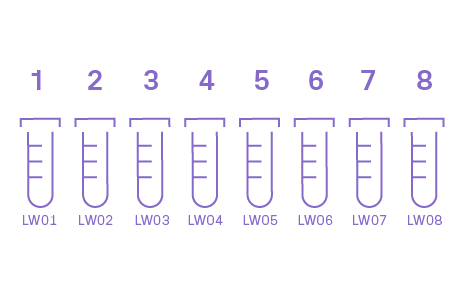
Unless otherwise instructed, GENEWIZ reserves the right to combine multiple vials of the same sample for extraction and/or library preparation.
- Plates: For projects with 16 or more samples, prepare samples in clearly labeled, securely sealed 96-well full-skirted PCR v-bottom plates. Arrange the samples vertically by column (i.e. A1, B1, C1, etc.)
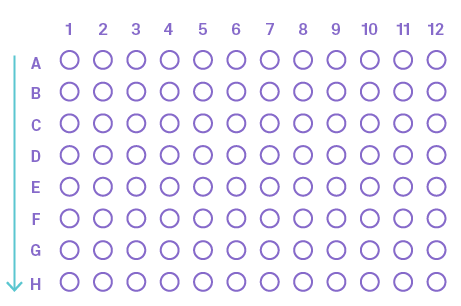
Ship samples directly to our facility. Use the shipping address listed on the order receipt.
What can I do if my samples do not meet the starting material requirements?
Please reach out to us by submitting an inquiry.
Order & Processing
How do I request a quote?
Request a quote through your GENEWIZ account. Click on the service you’d like to order.
How do I confirm a quote?
Log into your GENEWIZ account to confirm your quote.
How can I monitor the progress of my project?
The status of your order, including an estimated date of delivery, can be viewed anytime through your GENEWIZ account. Visit the Order Summary page of your project to find the current order status.
How can I send my samples to GENEWIZ?
Option #1: Ship samples directly to our facility. Use the shipping address listed on your order receipt.
Option #2: For double-stranded DNA samples, submit samples into a local GENEWIZ dropbox which are conveniently located throughout the US, Europe and United Kingdom. To locate a dropbox near you, please submit an inquiry. Place your order receipt and samples in a Ziploc bag packaged according to sample submission guidelines specific for your Next Generation Sequencing service.
Note: Not recommended for RNA and primary sample types.
What are the cutoff times for my dropbox pickup?
During checkout, consult the Order Summary page to find out the daily cutoff times for your selected dropbox (see example below).
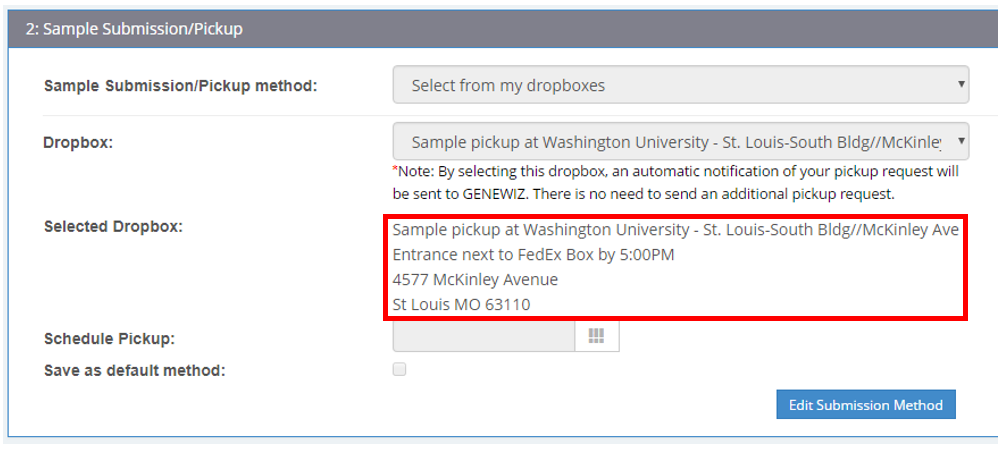
If you miss the dropbox deadline, feel free to ship samples directly to us.