

Modified Oligos
Modified oligos are synthetic DNA and RNA oligonucleotides engineered with chemical modifications to enhance performance in research, diagnostic, and therapeutic applications. GENEWIZ Oligo Modification services provide high-quality custom oligonucleotide synthesis with flexible scales, purification options, and a broad range of modifications, including fluorophores, quenchers, and phosphorothioate linkages.
These modified oligos are widely used in applications such as PCR, qPCR, CRISPR genome editing, and molecular diagnostics, where precision and reliability are critical. GENEWIZ oligos are synthesized using the industry-standard solid-phase phosphoramidite method, enabling accurate sequence construction and incorporation of complex chemical modifications for advanced research workflows.
Oligo Modification Services
-
DNA Oligo Modifications
Choose from 200+ chemical modifications for custom DNA oligonucleotide synthesis, including fluorophores, quenchers, phosphorothioates, and advanced options for PCR, qPCR, sequencing, and molecular biology workflows.
-
Custom Oligo Projects
Support for mixed bases, NGS adapter primers, oligo pools, DEL libraries, and specialized oligo designs tailored to complex research and assay needs.
-
RNA Oligos
High-quality custom RNA oligos for CRISPR workflows, RNA interference, gene expression studies, and therapeutic development.
Understanding Modified Oligos
Modified DNA and RNA oligos are synthetic oligonucleotides designed with chemical modifications that improve performance in research, diagnostic, and therapeutic applications. These modifications enhance stability, binding affinity, nuclease resistance, and detection sensitivity, making them ideal for qPCR, CRISPR gene editing, RNA interference, sequencing, and molecular diagnostics.
Modified oligos are used across a wide range of workflows, including PCR and qPCR assays, CRISPR guide RNA design, antisense and RNAi studies, next-generation sequencing, and molecular diagnostics. Chemical modifications improve signal strength, specificity, and resistance to degradation, enabling high-sensitivity and high-accuracy experiments.
Common oligo modifications include fluorophores, quenchers, phosphorothioate linkages, modified bases, and 5′ or 3′ end-labeling options. These modifications are designed to enhance stability, hybridization efficiency, and detection depending on the assay and experimental goals.
Modified oligos provide improved nuclease resistance, stronger target binding, higher specificity, and enhanced signal detection compared to standard oligos. These benefits lead to more reliable and reproducible results, especially in applications such as qPCR, CRISPR, and therapeutic research.
Featured Application: Gene Editing
RNA oligos play a critical role in regulating gene expression, transcription, and translation, making them essential tools in modern molecular biology. These custom RNA oligonucleotides are widely used in therapeutic development, functional genomics, and molecular diagnostics, where they serve as both probes and therapeutic agents for studying and modulating genetic function. In addition, RNA oligos are key components in CRISPR/Cas9 gene editing workflows, where they act as templates for precise genome modification. Synthetic single guide RNA (sgRNA) constructs from GENEWIZ enable efficient gene knock-out and knock-in experiments, eliminating the need for separate crRNA and tracrRNA annealing steps and simplifying experimental design.
-
snoRNA
Facilitates chemical modification of RNAs
-
miRNA
Regulates gene expression
-
siRNA
Silences gene expression
-
snRNA
Functions in various nuclear processes (e.g. splicing)
-
sgRNA
Edit genes with CRISPR/Cas9 systems
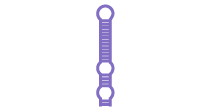
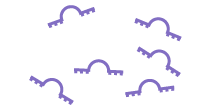
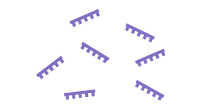
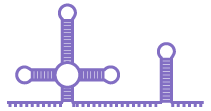
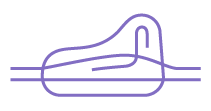
Discover the library of RNA structures and modifications available from GENEWIZ.
Popular Oligo Modifications
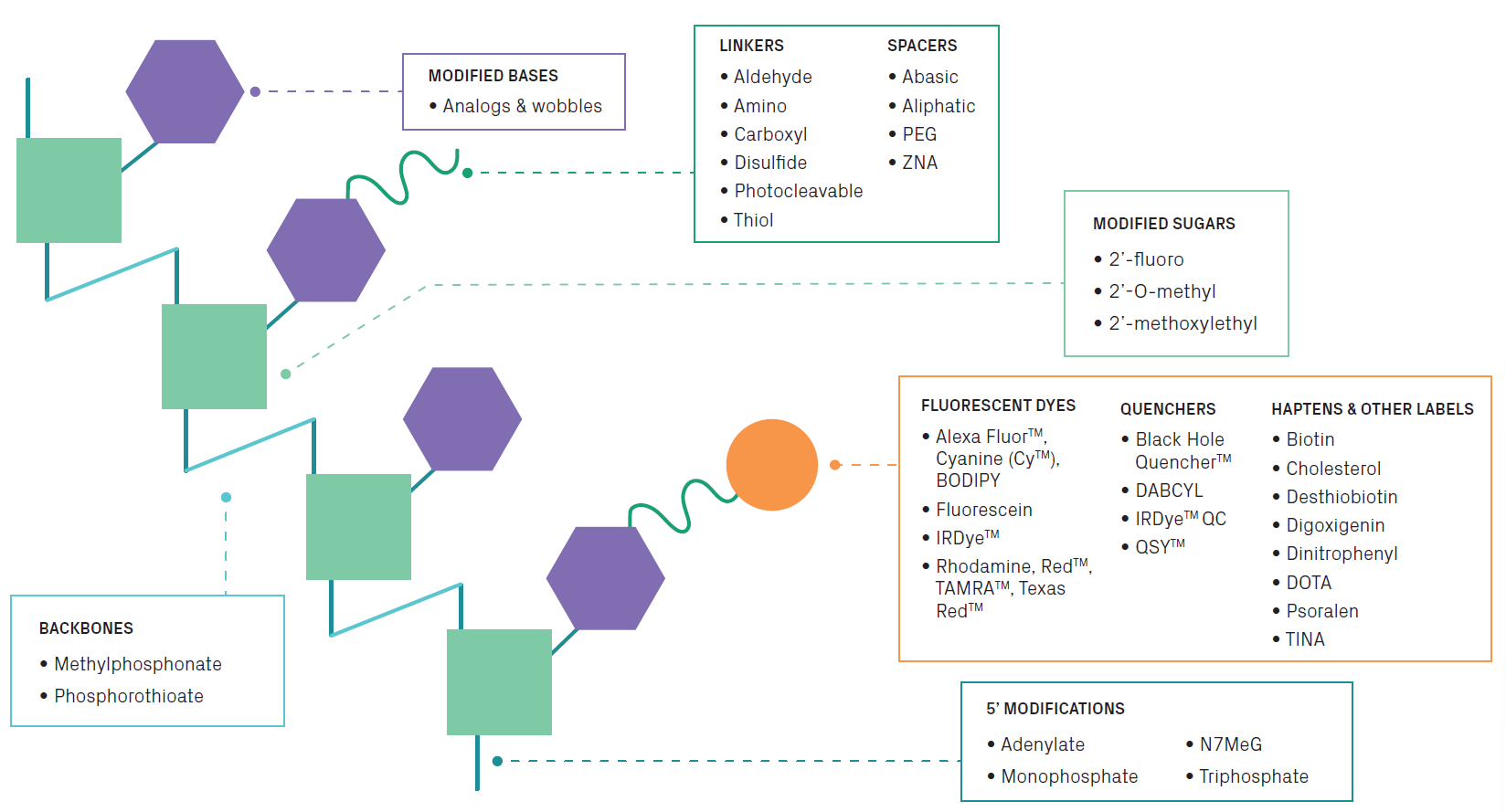
From molecular biology to medical research, GENEWIZ Modified Oligos support a wide range of applications, such as qPCR, CRISPR, and molecular diagnostics. Below are examples of commonly requested DNA oligo synthesis services and chemical modifications, including fluorophore-labeled oligos, quencher probes, and phosphorothioate-modified oligos. For a complete list of 200+ modifications or guidance on custom DNA and RNA oligonucleotide synthesis, contact our Ph.D.-level technical support team.
Modified Bases
Chemically modified nucleobases that enhance oligonucleotide stability, binding specificity, and functionality, improving nuclease resistance and enabling mutation detection, SNP analysis, CRISPR workflows, and therapeutic targeting.
Linkers
Chemical linkers used to attach fluorophores, quenchers, and biotin labels while maintaining flexibility and reducing steric hindrance for improved qPCR, sequencing, and molecular assay performance.
Spacers
Non-nucleosidic spacer units that create physical distance between functional elements, improving hybridization efficiency, target accessibility, and enzymatic activity in diagnostic and CRISPR applications.
Modified Sugars
Modifications such as 2’-O-methyl RNA and LNA enhance binding affinity, stability, and nuclease resistance for RNAi, antisense oligonucleotides, and gene expression studies.
Backbone Modifications
Phosphorothioate and PNA backbone modifications improve nuclease resistance and binding stability, making them ideal for antisense, therapeutic, and in vivo applications.
Fluorescent Dye Modifications
Fluorophore-labeled oligos enable fluorescence-based detection in qPCR, NGS, and imaging, supporting multiplexing and high-sensitivity analysis.
Quencher Modifications
Quencher molecules suppress background fluorescence until hybridization or cleavage, improving accuracy in probe-based assays like qPCR and molecular diagnostics.
Haptens and Labels
Biotin and digoxigenin labels enable capture, detection, and purification through antibody or protein interactions in ELISA and pull-down assays.
5′ Modifications
5′ end modifications introduce functional groups for labeling, ligation, and immobilization, supporting cloning, sequencing, and assay development workflows.
Features and Benefits
-
High Quality: Synthetic error rates <0.1% and strict ISO 9001:2015 quality control. All modifications verified by advanced mass spectrometry.
-
Convenient Deliverables: Lyophilized oligos are delivered in tube or plate formats after desalting or purification by PAGE or HPLC.
-
Flexible Syntheses: RNA oligos, oligo pools, ultra-pure options, and custom designed oligos are available with custom yield options from ng to mg quantities.
-
Easy Ordering: Call, email, or use our intuitive online ordering system 24 hours/7 days a week. Our custom ordering form provides additional flexibility for any oligo need.
OLIGO Purification Options
DNA oligonucleotides are provided in either a tube or plate format, fully lyophilized after purification. Below are recommended purification techniques based on DNA oligo length and required purity.
| Purification | Applicable Length | Advantages |
|---|---|---|
| Desalted Purification | 5–90 nt | Fast turnaround time and favorable price |
| PAGE Purification | 21–150 nt | High purity >90%; suitable for long oligos |
| HPLC Purification | 5–90 nt | High purity >95%; suitable for modified oligos |