

Cancer Genomics
Cancer Genomics utilizes multiomic and next-generation sequencing technologies that enable the integrated analysis of cancer at the genomic, transcriptomic, proteomic, and metabolomic levels. Innovations such as single-cell sequencing, spatial transcriptomics, and multi-omics integration reveal tumor evolution, heterogeneity, microenvironment interactions, and treatment response, driving biomarker discovery and target validation.
Gene synthesis and delivery allow precise modeling of cancer-associated genes and mutations in cells or animal models to directly assess their impact on tumor progression and therapeutic response. With optimized assays, rigorous quality control, and advanced sequencing platforms, GENEWIZ and its expert technical support team help accelerate reliable, high-impact cancer research.

Features & Benefits
GENEWIZ brings over 20 years of experience in sequencing and gene synthesis solutions to accelerate cancer research. We provide high quality, reliable, and locally supported project execution. Our dedicated teams ensure clear communication and seamless collaboration throughout your research journey.
-
Comprehensive multi-omics services including single cell, spatial and proteomics starting from FFPE
-
Range of gene synthesis solutions for in vitro analysis of nucleotide and amino acid-level changes on the mechanisms of cancer
-
Variety of service levels to best fit your needs, ranging from Research Use Only to CLIA validated assays
-
Dedicated Ph.D.-level support at every step with real-time project updates through our online system
Cancer Research and GENEWIZ Multiomics Support
GENEWIZ multiomics services support all stages of research by enabling high-quality, integrated analysis of genomic, transcriptomic, and other molecular data to uncover tumor heterogeneity, identify actionable biomarkers, and accelerate target discovery with confidence, and providing gene synthesis and delivery systems to allow modelling of gene actions.
Cancer Genomics Applications
| Application | GENEWIZ Service |
|---|---|
| Detect and characterize DNA changes in cancer cells vs normal cells, and post gene integration; monitoring / confirmation of changes in DNA | |
| Detect and characterize specific gene expression and proteins in vivo and in vitro; understand tumor heterogeneity and tumor evolution within the microenvironment | |
| Cloning of gene editing and expression constructs | |
| Target profiling | |
| Cell and gene therapy, CAR-T development, reporter cell development |
We also offer Preclinical & Clinical grade services. Our laboratory is FDA and EPA GLP compliant and CAP/CLIA accredited, delivering solutions from sample collection to sequencing, analysis, and reporting—through flexible services tailored to your needs. Learn more about our clinical services.
Technical Resources
-
Webinar | FFPE and Liquid Biopsy Multiomics: Solutions for Difficult Samples
Formalin-fixed paraffin-embedded (FFPE) tissue samples and liquid biopsies are valuable for oncology research, providing insights into tumor biology, disease progression, and treatment response. However, handling these sample types can be challenging. In this webinar, discover how an integrated multiomics workflow tailored to FFPE samples and liquid biopsies, including genomics, epigenomics, transcriptomics, and proteomics solutions, can get the most out of your samples.
-

Workshop | Viral-Vector Solutions: Enhancing the Development of Cell & Gene Therapy Treatments
Viral vectors hold immense promise for precision medicine in oncology. While lentivirus plays a critical role in the emergence of cell therapies through genetic modifications, such as CAR-T therapy, adeno-associated virus (AAV) vectors are emerging in cancer gene therapy. Explore the development process of viral delivery systems for oncology therapeutics, from synthesis through production and confirmation, to tackle challenges and optimize downstream success.
-
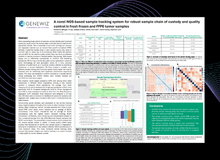
Poster | A Novel NGS-based Sample Tracking System for Robust Sample Chain of Custody and Quality Control in Fresh-Frozen and FFPE Tumor Samples
Here we describe a robust, cost-effective sample tracking assay that allows functional quality control, as well as sample identity tracking. The panel included varied SNPs across chromosomes with minor allele frequencies that varied between different ethnic groups. With consistently high accuracy and precision for both blood and tumor samples, this assay allows for easy identification of swapped samples– leading to an overall increase in data quality for cancer research studies.
-

Poster | Revolutionizing Antibody Therapeutics: Harnessing Machine Learning for Bispecific Antibody Discovery
Machine learning and next generation sequencing (NGS) are revolutionizing antibody discovery by addressing the inefficiencies of traditional methods. By combining NGS with in vivo and in vitro campaigns, discover how this streamlined approach uncovers up to 50 times more sequence diversity and enables the development of novel tool antibodies and bispecific antibodies.
-

Poster | Cohort-based Integrated Multiomics from Single Sample Blood Draws Provides Comprehensive Holistic Phenotypic Insights
Discover how complex multiomics information can be analyzed from a single sample, including transcriptomics, proteomics and metabolomics. This integrative approach reduces the need for repeated patient collections and lowers bio-storage requirements, making it a more patient-friendly and cost-effective solution to help drive greater insights in human health applications.