

DNA Sequencing Frequently Asked Questions
Whole Genome Sequencing FAQs
What is whole genome sequencing (WGS)?
Whole genome sequencing (WGS) is the comprehensive reading and analysis of an entire genome, including intronic and exonic regions. It provides a high-resolution, base-by-base view of the entire genetic material, including all chromosomes and mitochondrial or plasmid DNA.
What are the differences between the service packages?
The packages differ in price and turnaround time:
- Value is the most economical option to help projects come under budget
- Preferred offers a balance of speed and cost, leveraging our optimized processes for quick results without breaking the bank
- Express helps meet tight deadlines with industry-leading turnaround times
- Lightning provides results at lightning speed for select library options
The package type can be revised after receiving your initial quote.
Note: Service packages may not be available for all services (e.g. EZ services), projects, or institutions. Please inquire if an expedited solution is required for an exempt service.
Do you offer PCR-free whole genome sequencing?
Yes, PCR-free library preparation is available for whole genome sequencing. PCR-free means reduced library bias and gaps resulting in high data quality and optimal variant detection.
How do I request a quote for whole genome sequencing?
Log in to your GENEWIZ account and select a service:
- For short-read (Illumina) whole genome sequencing, select the Whole Genome Sequencing icon.
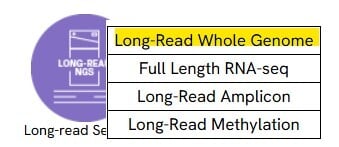
- For long-read (PacBio and Oxford Nanopore Technologies) whole genome sequencing, select the Long-Read Services icon.
Then fill out the form with your project information and select Next: Review Inquiry at the bottom. Review the details of your inquiry and click Submit Quote Request.
What is the price for whole genome sequencing?
Please submit a quote request to receive accurate pricing information, as the cost depends on the details of the project. You can also contact the team by submitting an inquiry.
For a quick tutorial, watch our step-by-step instructions.
Whole Genome Sequencing Technical Details
What are the technical details of your whole genome sequencing?
Please download our Technical Specifications Sheet. Visit the following pages for more information about Low-Pass Whole Genome Sequencing and Clinical Whole Genome Sequencing.
What is the difference between resequencing and de novo sequencing and assembly?
Resequencing is typically performed when a reference genome sequence is available. Sequencing reads are aligned back to the reference to determine the location in the genome the specific read best matches. Resequencing is often applied to variant detection (single nucleotide polymorphisms, small insertions/deletions, structural variants, copy number variation) and derivatives thereof — such as tumor vs normal comparison, population genetic analysis, Mendelian disease analysis, and trio sequencing.
De-novo sequencing and assembly are typically applied to organisms where no reference genome is available, or the available reference is of poor quality. Genomes that have not been sequenced before must be assembled via a de novo approach following sequencing. This assembly can then be used for additional analyses and the basis for future resequencing projects.
What sequencing platforms are used for whole genome sequencing?
The answer is highly dependent on many factors, including the goals of your experiment, the organism of interest, and the amount of material available.
Most resequencing applications are well suited for Illumina platforms. Illumina sequencing produces large numbers of short reads (<300 bp) at high-quality allowing for robust variant detection. Illumina datasets are widely applied to genomic studies of viruses, bacteria, mammals, and plants with a wide range of input materials including low input DNA, FFPE samples, and circulating cell free DNA.
However, certain analyses are improved by very long sequencing reads generated by the PacBio (up to 25kb) or Oxford Nanopore Technologies (exceeding 4Mb) platforms. These long reads can span large repeat regions, enabling near complete de novo assembly of small to medium sized genomes, improved assembly of large complex genomes (e.g. plants, human and animals), and more sensitive detection of large structural variants. Long-read sequencing is ideal for complex genomes that could be highly repetitive in nature and/or have GC extremes.
For more information, visit our NGS Platforms webpage.
What starting materials are accepted?
The most common starting material is extracted genomic DNA. However, we have extensive experience performing extractions from a wide variety of materials, including cell pellets, fresh frozen tissue, whole blood, and FFPE slides. Read our Sample Submission Guidelines for more information.
How do I properly prepare high molecular weight (HMW) DNA samples for long-read sequencing?
Please refer to our HMW DNA Best Practices for guidelines on extracting and handing these samples.
How much coverage do I need for my experiment?
The answer is highly dependent on many factors, including the goals of your experiment, the organism of interest, and the amount of material available.
Below are some general recommendations for short-read whole genome sequencing using Illumina platforms:
- Germline/frequent variant analysis: 20-50x
- Somatic/rare variants: 100-1000x
- Tumor vs Normal: ≥60x tumor, ≥30x normal
- Population studies: 20-50x
- De novo assembly: 100-1000x
Below are some general recommendations for long-read whole genome sequencing using PacBio and Oxford Nanopore Technologies platforms:
- Gap filling and scaffolding: 10x
- Large structural variant detection: 10x
- Germline/frequent variant analysis: 20-50x
- De novo assembly: 50-100x
Coverage is a multiplier based on the total size of the genome (see below):
Coverage = (read length) x (total number of reads) / (genome size)
Example: 30x = (2×150 bp/read) x (300 x 106 reads) / (3 x 10⁹ bp)
Whole Genome Sequencing Data Analysis
What bioinformatics services are available for whole genome sequencing projects?
We provide raw data as FASTQ files for all projects. We also have advanced bioinformatics capabilities to provide optional data analysis services, including:
For resequencing of individual human genomes on Illumina platforms
- Standard DNA Analysis Package: mapping, SNP/INDEL detection, structural variant analysis, and copy number variation detection
- De-novo assembly
- Tumor vs normal variant analysis
- Joint-genotyping
- Population genotyping
- Integration site prediction
- Custom analysis
We provide raw data as FASTQ files for all projects. We also have advanced bioinformatics capabilities to provide optional data analysis services, including:
For sequencing of non-human genomes on Illumina platforms
–- Standard DNA Analysis Package: mapping, SNP/INDEL detection, and structural variant analysis
- CNV discovery
- De-novo assembly
- Custom analysis
Larger structural variants can be better resolved with low coverage on long-read sequencing such as PacBio and Oxford Nanopore Technologies platforms. Complete to near-complete sequence assemblies can be obtained for most genomes.
What factors impact the mapping rate?
There are many factors that may impact the mapping rate, such as the sample quality and amount, reference genome quality, contamination with other species, etc. We cannot guarantee the mapping rate.
What factors impact the mapping rate?
There are many factors that may impact the mapping rate, such as the sample quality and amount, reference genome quality, contamination with other species, etc. We cannot guarantee the mapping rate.
What is the normal range of PCR duplicates?
Since PCR amplification is the major source of PCR duplicates, some amount of PCR duplication is inevitable. Although there is no industry standard for a normal range of PCR duplicates, and since the results vary among different library preparation kits, we will do our best to keep PCR duplicates to a minimum. If you’re concerned about PCR duplication or errors, GENEWIZ does offer a PCR-free library preparation method.
Do you keep the unmapped reads?
Our standard analysis pipeline includes unmapped reads within the BAM files.
What is the normal range of coverage?
Sequencing coverage requirements vary by application. GENEWIZ recommends 30X or greater for germline analysis and 60X or greater for somatic analysis.
How do we receive our variant results? What do the columns mean?
Most of our variant calling pipelines generate a .vcf file which is a standard format for this type of data. For more information on the description of the columns, please view a detailed overview here: https://samtools.github.io/hts-specs/VCFv4.2.pdf.
What if the number of variants is above/below expectation?
The number of variants could be impacted by sample collection, preparation, reference genome quality, and variant calling threshold.
What is the analytic sensitivity?
For germline variants, we have a SNP precision of >99% and recall of >97%, as well as small indel (<50bp) precision of >98% and recall of ~96%.
How does GENEWIZ filter variants? Is it done by a minimum variant frequency cutoff?
Variants are not called based on a frequency percentage, but rather the pipeline considers multiple QC parameters to determine whether the variant is true or not. The “FILTER” column contains information about if a particular variant passed the program’s quality filters.
Do you annotate the variants with gene information?
The variants are annotated using SnpEff. It includes gene annotations, as well as amino acid change information.
Long-Read Whole Genome Sequencing FAQs
What is long-read whole genome sequencing (WGS)?
Long-read whole genome sequencing uses next generation sequencing technology to generate reads tens to hundreds of kilobases long. The long-read sequencing technologies available at GENEWIZ are PacBio® and Oxford Nanopore Technologies® platforms.
What sequencing platforms are used for long-read whole genome sequencing?
We offer long-read whole genome sequencing on PacBio® and Oxford Nanopore Technologies® sequencing platforms. Platform selection depends on project needs such as amplicon length, accuracy, and throughput.
Unsure which platform to choose? Please submit an inquiry for assistance with designing your experiment.
Which platform provides higher accuracy?
PacBio® HiFi reads offer superior per-base accuracy (>99.9%) due to circular consensus sequencing, while Oxford Nanopore Technologies® has improved significantly with newer basecallers but still trails slightly in raw accuracy. GENEWIZ provides Super Accuracy Basecalling (SUP) for Oxford Nanopore Technologies®, achieving high read accuracy, often exceeding 97%, recommended for de novo assembly projects and low-frequency variant analysis.
Can samples be multiplexed?
Yes, both platforms support barcoding for multiplexing. PacBio® uses barcoded hairpin adapters, while Oxford Nanopore Technologies® uses rapid and native barcoding kits.
What are the key differences between PacBio® and Oxford Nanopore Technologies® for long-read whole genome sequencing?
PacBio® HiFi offers exceptional accuracy (Q30+), ideal for variant calling and de novo assembly.
Oxford Nanopore Technologies® offers ultra-long reads (up to 2 Mb), real-time sequencing, and native DNA modification detection.
Can these platforms be used for clinical-grade sequencing?
Yes, PacBio® HiFi is increasingly used in clinical research due to its high accuracy.
While Oxford Nanopore Technologies® is also advancing in clinical applications, especially for rapid diagnostics, it is only available for research use only (RUO) applications in a non-regulated environment.
What types of applications are best suited for long-read whole genome sequencing?
- De novo genome assembly
- Structural variant and repeat expansion detection
- Haplotype phasing
- Methylation and epigenetic profiling
- Rare disease and cancer genomics
- Microbial and metagenomic studies
What is the price for long-read whole genome sequencing?
Please submit a quote request to receive accurate pricing information, as the cost depends on the details of the project.
You can also contact the NGS team by submitting an inquiry.
Low-Pass Whole Genome Sequencing FAQs
What is low-pass whole genome sequencing (LP-WGS)?
Low-pass whole genome sequencing (also referred to as LP-WGS or shallow whole genome sequencing) is an inexpensive, high-throughput, DNA-sequencing technology used to accurately detect genetic variation within the genomes of a multitude of species. Using imputation algorithms, this technology offers a high accuracy of variant call detection at a very low sequence coverage.
What are the advantages of LP-WGS over other techniques?
LP-WGS has the following advantages:
- Inexpensive alternative compared to exome, WGS, and genotyping arrays
- Higher statistical power, discovery of new rare variants, provides significantly more data compared to genotyping arrays
- Up to 99% accurate detection of variant calls
- Low DNA input required
What is the LP-WGS Plus solution?
In some cases, e.g. clinical applications, it may be beneficial to receive additional coverage of specific regions of interest using deep sequencing approaches. GENEWIZ’s LP-WGS Plus service is a unique solution that combines LP-WGS with our exome sequencing or targeted sequencing services, enabling researchers to gain additional coverage of particular genomic regions or variants while still remaining cost-effective.
How does GENEWIZ utilize imputation for LP-WGS and LP-WGS Plus?
Imputation based analyses have become a key tool for analyzing human genetic data. Imputation is a technique that uses the sequence data generated alongside publicly available reference data to bioinformatically “fill in the gaps” allowing researchers to accurately evaluate the association of genetic markers that are not directly sequenced.
Can GENEWIZ assist with experimental design?
Absolutely! GENEWIZ’s NGS team is comprised of a group of dedicated technical experts that are available to assist with designing your experiment and answering any questions you may have. You can either submit your questions using the quote request form to your left, or you can submit an inquiry through the button above.
How do I contact GENEWIZ for a technical consultation about my project?
The GENEWIZ NGS Team is composed of Ph.D. scientists who can help you optimize your project design and provide consultation. You can contact the team by submitting an inquiry.
What is the price for LP-WGS?
Please submit a quote request to receive accurate pricing information, as the cost depends on the details of the project.
Low-Pass Whole Genome Sequencing Sample Preparation
How should I prepare my samples?
Please submit at least 500 ng of normalized genomic DNA at a concentration of 20 ng/µL in 96 well plates. We do not perform sample QC in order to provide the most cost-effective service possible.
Does the starting material need to be normalized to 20 ng/µL?
Yes, you must normalize your starting material as GENEWIZ does not adjust the concentration prior to library preparation. For optimal results, please adjust your sample concentrations to 20 ng/µL prior to submission. We recommend using a dsDNA quantification assay such as Qubit or PicoGreen.
What are the sample submission guidelines?
- Sample Type: Genomic DNA
- Sample Purity (OD260/280): 1.8-2.0
- Minimum Amount: 500 ng (We recommend using a dsDNA quantification assay such as Qubit or PicoGreen.)
- Concentration: Normalized to 20 ng/µL
- Resuspension Buffer: Water, EB, or low TE (<0.1 mM EDTA)
- Shipment Method: Dry Ice
Do you accept other sample types besides Genomic DNA?
Yes, for complete sample details, see the Sample Submission Guidelines.
What happens if my samples do not meet your starting material requirements?
GENEWIZ’s NGS team is composed of Ph.D. scientists who can help you optimize your project design and provide consultation.
Low-Pass Whole Genome Sequencing Data Analysis
Which sequencing platform should I choose?
The answer is highly dependent on many factors, including the goals of your experiment, the organism of interest, and the amount of material available. In most cases, standard Illumina® platforms with 2×150 bp chemistries are used for LP-WGS projects.
Which organisms are available for imputation?
Human, mouse, rat, dog, soy, maize, domestic cat, chicken, and cattle.
Am I out of luck if my species of research is not on your list?
Absolutely not! We may be able to build a reference genome for you. We can perform deep sequencing on a select number of individuals and assemble a reference genome for imputation. Please contact us here for more details.
What reference database(s) are used for each species?
We use 1000 Genomes Phase 3 for our human imputation reference panel. For more information on reference panels from other species, please contact our NGS team.
What bioinformatics analysis does GENEWIZ offer for LP-WGS?
Standard deliverables for LP-WGS (human, mouse, rat, dog, soy, maize, domestic cat, chicken, and cattle) include the following:
- Sample QC, includes raw data QC & alignment metrics
- FASTQ files
- Aligned BAM file: BAM file with reads aligned to the target genome, includes all reads from original FASTQ files
- Imputed VCF file
Human LP-WGS deliverables:
In addition to the standard deliverables for all species, human LP-WGS data analysis also includes the following:
- Copy number variant analysis
- Ancestry analysis
- Calculated polygenic risk scores files
Custom bioinformatics analysis and reports are available. Please contact us for details on customizing your analysis to answer your biological question(s).
How is data delivered?
GENEWIZ will recommend the best data delivery option based on the platform and project details. Data delivery options include:
- Secure File Transfer Protocol (sFTP)
- Customer cloud account
- Hard drive (additional charges may apply)
How will my data be delivered?
If your results are being shipped to you via hard drive, you can track its shipment using the tracking number provided to you in the delivery email sent from GENEWIZ.
If your results are being delivered via another data delivery method, such as AWS S3, Aspera, or other cloud-based methods, please refer to the delivery email sent from GENEWIZ for detailed information on the transfer, and consult with your IT department to ensure compliance with your institution’s policies.
If your results are being sent via a secure File Transfer Protocol (sFTP), please refer to GENEWIZ’s sFTP Data Download Guide for instructions on how to download your data and troubleshooting tips.
Exome Sequencing FAQs
What is exome sequencing?
Exome sequencing is the targeted enrichment and subsequent sequencing of the whole exome. Exome sequencing is potentially the most powerful tool available to the research community for the identification of genetic variations associated with a phenotype, such as a disease.
What is the advantage of exome sequencing compared to whole genome sequencing?
Whole genome sequencing requires an extremely high amount of sequencing throughput to generate a moderate depth of coverage. The data generated, while comprehensive, does not allow detection of mutations with as much sensitivity as a targeted approach. Exome sequencing is the most cost-effective and efficient solution.
A large portion of relevant mutations occur in the exome. In fact, the exome contains as many as 85% of disease-related mutations. Covering less than 2% of the whole genome, exome sequencing requires only 1/50th of the sequencing throughput to generate the same depth of coverage. This approach provides flexible experimental options:
- Maintain the same depth of coverage and multiplex more samples into the same sequencing lane, significantly decreasing total project cost
- Increase the depth of coverage to facilitate the detection of rare, low-frequency mutations
What species can be analyzed for exome sequencing?
Human and mouse exome sequencing are offered as standard services. However, we can procure commercially available exome kits for other species upon request.
What starting materials are accepted?
We routinely accept genomic DNA and have extensive experience performing extractions from a wide variety of materials, including cell pellets, fresh frozen tissue, blood, and FFPE slides. For more information, check out our Sample Submission Guidelines for research-use-only or clinical samples.
What exome kit do you use?
For human samples, we use Twist Human Comprehensive Exome Panel chemistry. However, other kits can be procured upon request.
How much coverage do I need?
The answer depends on the goals of your sequencing project. Several recommendations are shown below. Please feel free to contact us to discuss the right amount for your project.
- Germline/frequent variants: 50-100x (~5-10 Gb)
- Somatic/rare variants: ≥200x (20+ Gb)
- Tumor vs Normal: ≥200x (20+ Gb) tumor, ≥100x (10+ Gb) normal
- Population studies: 50-100x (~5-10 Gb)
Do you offer exome sequencing for clinical research?
Yes! We offer two service levels for clinical whole exome sequencing: CLIA Environment and CLIA-Validated. Both are performed in a CLIA-certified lab by CLIA-trained personnel on CLIA-qualified equipment. The only difference is that CLIA-Validated Service includes a Lab Director Signature and enhanced QA Oversight whereas CLIA Environment does not. In addition, the CLIA Environment service level allows greater flexibility in experimental design, such as custom starting materials, and offers a range of sequencing coverage options. CLIA-Validated is recommended if results are used for diagnostic purposes. CLIA Environment is ideal for data that will not be reported back to patients or used for medical decision-making.
What bioinformatic analysis is available for exome sequencing projects?
We provide raw data as FASTQ files for all projects. We also offer mapping and variant calling through BAM and VCF files, respectively. CNV discovery is available for our research-use-only services. Please note that no variant annotation or interpretation is offered at this time for our clinical services.
Why choose GENEWIZ for exome sequencing projects?
We have proven our steadfast commitment to superior service throughout the years, becoming established as a global leader in DNA sequencing and genomics. Further, we have extensive experience and expertise in next generation sequencing techniques, including exome sequencing. An expert Project Manager can assist you in determining specifications for optimizing your project.
How is data delivered?
Yes, we can recommend the best data delivery option based on the platform and project details. Options include:
- Secure File Transfer Protocol (SFTP)
- Customer cloud account
- Hard drive (additional charges may apply)
How will my data be delivered?
If your results are being shipped to you via hard drive, you can track its shipment using the tracking number provided to you in the delivery email sent from GENEWIZ.
If your results are being delivered via another data delivery method, such as AWS S3, Aspera, or other cloud-based methods, please refer to the delivery email sent from GENEWIZ for detailed information on the transfer, and consult with your IT department to ensure compliance with your institution’s policies.
If your results are being sent via a secure File Transfer Protocol (sFTP), please refer to GENEWIZ’s sFTP Data Download Guide for instructions on how to download your data and troubleshooting tips.
What is the price for exome sequencing?
Please submit a quote request to receive accurate pricing information, as the cost depends on the details of the project.
What service packages are available?
We have three service packages available for human research-use-only exome sequencing. They differ in price and turnaround time:
- Value is the most economical: ~10% less in cost and ~2 weeks longer than Preferred
- Preferred offers a balance of speed and cost, leveraging our optimized processes for industry-leading turnaround time at an affordable price
- Express is the fastest: ~1 week faster and ~20% more in cost than Preferred
Furthermore, Preferred and Express options include guaranteed turnaround time and dedicated project managers. The package type can be revised after receiving your initial quote.
Note: Service packages are not available for all services, projects, or institutions. Clinical exome sequencing is excluded.
Exome Sequencing Data Analysis
What is the size of the targeted regions?
The size of the targeted regions is ~34M bases. It accounts for ~1% of the human genome and covers 99% of ClinVar variants.
How much have the targeted sequences been enriched?
The targeted region is enriched ~50 fold compared to the genomic background.
How much coverage is required for somatic mutation detection?
We recommend having total data of ~5-10Gb for ~100-200x mean coverage of the target regions.
Do you send BED files with raw data delivery?
We send BED files by request.
What is the lowest allele frequency for the SNP and Indel detection in somatic WES analysis?
The SNP is not called/uncalled simply based on the allele frequency. It is called based on the combination of multiple parameters, such as count, coverage, quality, and others. The full list is listed at the beginning of the VCF variant file.
How can you determine if a mutation is germline or somatic?
Germline and somatic variant calling use different statistical models and algorithms. In addition, GENEWIZ utilizes a panel of normals and various databases, such as gnomAD, dbSNP, and others to filter out technical artifacts and common germline SNPs. Nevertheless, having a paired normal sample is preferred to help remove sample-specific germline variants.
For alignment, do you use the BED files or genome reference. Why?
We use the full reference genome because it includes data from outside the targeted regions. Doing so allows the misalignment of reads to be minimized. The BED file is subsequently used to restrict the variant calling region to the specified exon bait regions.
General Questions
How do I contact GENEWIZ for a technical consultation about my project?
The GENEWIZ NGS Team is composed of Ph.D. scientists who can help you optimize your project design and provide consultation. You can contact the team by submitting an inquiry.
Does GENEWIZ guarantee turnaround?
Our team prioritizes fast turnaround times and provide a timeline based on first-pass processing. The turnaround time listed within the quote is inclusive of all steps quoted, unless otherwise noted. If repeat processing is required, the turnaround may be subject to change and will be proactively communicated to the client.
If the scope of a project changes after project initiation or if sample or project clarification is required after sample receipt, GENEWIZ may reassess the turnaround time based on the subsequent communications and modifications (if applicable).
What extraction methods are used?
All extraction kits and reagents are routinely updated to remain best-in-class. Please proactively contact GENEWIZ if you would like historical versions, which may be available on a case-by-case basis.
Extractions are performed to the best of our ability and are unable to guarantee yield due to multiple variables that may affect sample yield and quality. Costs to cover the work performed will be applied, regardless of the outcome.
What library preparation methods are used?
All library kits and reagents are routinely updated to remain best-in-class. Please proactively contact GENEWIZ if you would like historical versions, which may be available on a case-by-case basis.
Does GENEWIZ perform sample QC and what methods are used?
For most of the services, an initial sample QC is included within the fee of the project for all samples that will proceed to the next processing stage (e.g. library preparation or sequencing) unless otherwise noted within the quotation. Resubmissions or additional, optional samples may incur a nominal fee for QC.
Most services include an initial sample QC within the project fee for samples proceeding to the next stage (e.g., library preparation or sequencing). Resubmissions or additional samples may incur a small QC fee unless noted otherwise in the quotation.
Initial sample QC can include:
- Assessing RNA concentration and integrity
- Assessing DNA concentration and DNA size (for select projects)
- Assessing premade library size and concentration
- Assessing cryopreserved cells by cell count and viability
What sequencing instruments will be used for my project?
The sequencing platform will be listed within the Service Description of the quotation.
Unless specifically noted in the quotation, GENEWIZ reserves the right to choose between equivalent instruments depending on the target read depth and configuration requested. If a specific instrument is required, please add special comments in your quote/order and notify our NGS team prior to project initiation.
How does GENEWIZ guarantee data quality and yield?
Illumina-based projects
For samples that pass QC and libraries prepared at GENEWIZ:
Data Quality
- NovaSeq 2x150bp: ≥85% of bases ≥Q30
- NovaSeq 2x250bp: ≥80% of bases ≥Q30
- MiSeq 2x150bp: ≥80% of bases ≥Q30
- MiSeq 2x250bp: ≥75% of bases ≥Q30
Data Yield
- Within 10% of total data target yield per lane or flowcell, unless otherwise noted
- Within 20% of per sample target yield, unless otherwise noted
Quality and yield for samples that do not pass QC and are processed at best effort are not guaranteed. Premade libraries/library pools submitted for sequencing only quality and yield are evaluated on a case-by-case basis.
Multiplexing is performed to the best of our ability to ensure relatively even data distribution amongst samples.
PacBio-based projects
Due to various sample-related factors that may influence long-read sequencing yield and quality, GENEWIZ cannot guarantee overall data output and quality. However, based on extensive experience with long-read workflows, GENEWIZ has established target metrics based on the PacBio system based on the sample submitted and library type. If a project does not meet these targets, a thorough review of the processing will be performed. If the issue is determined to be unrelated to the sample, a repeat or top-off will be performed as necessary.
What is GENEWIZ’s coverage guarantee?
Due to the possible wide range of performance being influenced by sequence complexity and sample quality, GENEWIZ does not guarantee average coverage or on-target specificity for each sample. We can instead recommend target data output that would increase the chances of obtaining the desired coverage based on the sample and library type utilized.
What is GENEWIZ’s data analysis guarantee?
Data analysis is performed to the best of our ability and results are not guaranteed for samples or libraries not passing QC or do not fit the analysis pipeline’s criteria.
Can you recommend the best data delivery option?
Yes, we can recommend the best data delivery option based on the platform and project details. Options include:
- Secure File Transfer Protocol (sFTP) – additional charges may apply
- Customer Cloud Account – AWS, Microsoft Azure, Google Cloud
- Hard Drive – additional charges may apply
How will my data be delivered?
By default, results are sent via a secure File Transfer Protocol (sFTP). Please refer to our sFTP Data Download Guide for instructions on how to download your data and troubleshooting tips. Additional charges may be applicable for large data transfers.
Please refer to the delivery email sent from GENEWIZ for detailed information on the transfer and consult with your IT department to ensure compliance with your institution’s policies.
Will my data be secure at GENEWIZ?
We take data security very seriously and we make every attempt to keep your data private and protected. The data transfer we offer is secure; however, should you desire an alternative delivery method, we are happy to work with you.
How long does GENEWIZ store samples?
We hold any remaining samples for up to 3 months after project completion. Clinical samples processed in our Regulatory-Environment or CLIA-licensed laboratory may have longer sample storage timelines. Please contact us if you would like samples retained for a longer period or shipped back to you.
How long does GENEWIZ store data?
GENEWIZ offers raw data storage (i.e. FASTQ for Illumina, BAM for PacBio, POD5 for Oxford Nanopore) for up to 6 months after project completion. Data generated for samples processed in the Regulatory-Environment or CLIA-licensed laboratory may have longer data retention timelines. Please contact us if you would like the data to be retained for a longer period.
Sample Preparation
How should I prepare and send my samples?
View our Sample Submission Guidelines for instructions on preparing and sending samples. Organize your samples in tubes or plates following the order indicated on the sample submission form.
- Tubes: Prepare samples in clearly labeled and well-organized 1.5 mL flip-cap microcentrifuge tubes. Please avoid using Parafilm to seal the tubes.
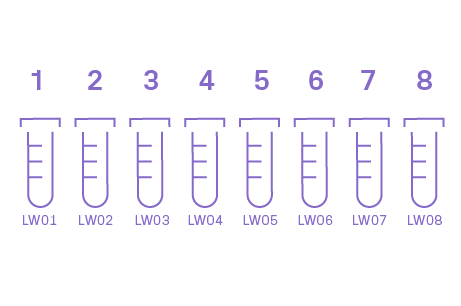
Unless otherwise instructed, GENEWIZ reserves the right to combine multiple vials of the same sample for extraction and/or library preparation.
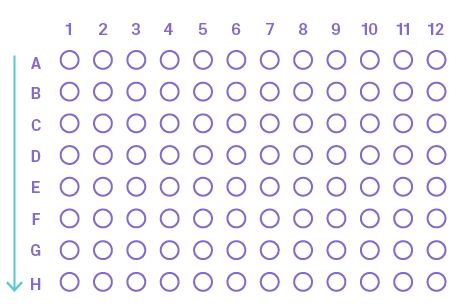
- Plates: For projects with 16 or more samples, prepare samples in clearly labeled, securely sealed 96-well full-skirted PCR v-bottom plates. Arrange the samples vertically by column (i.e. A1, B1, C1, etc.)
Ship samples directly to our facility. Use the shipping address listed on the order receipt.
What can I do if my samples do not meet the starting material requirements?
Please reach out to us by submit an inquiry.
Order & Processing
How do I request a quote?
Request a quote through your GENEWIZ account. Click on the service you’d like to order.
How do I confirm a quote?
Log into your GENEWIZ account to confirm your quote.
How can I monitor the progress of my project?
The status of your order, including an estimated date of delivery, can be viewed anytime through your GENEWIZ account. Visit the Order Summary page of your project to find the current order status.
How can I send my samples to GENEWIZ?
Option #1: Ship samples directly to our facility. Use the shipping address listed on your order receipt.
Option #2: For double-stranded DNA samples, submit samples into a local GENEWIZ dropbox which are conveniently located throughout the US, Europe and United Kingdom. To locate a dropbox near you, please submit an inquiry. Place your order receipt and samples in a Ziploc bag packaged according to sample submission guidelines specific for your Next Generation Sequencing service.
Note: Not recommended for RNA and primary sample types.
What are the cutoff times for my dropbox pickup?
During checkout, consult the Order Summary page to find out the daily cutoff times for your selected dropbox (see example below).
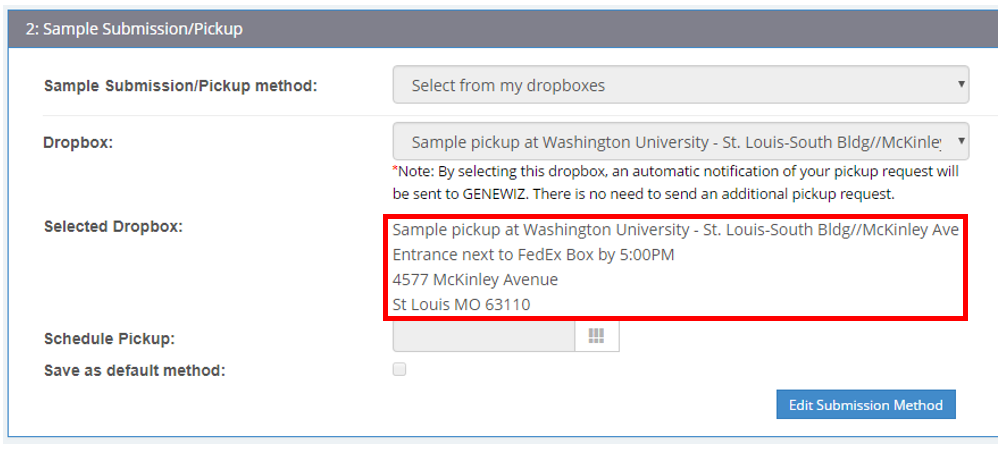
If you miss the dropbox deadline, feel free to ship samples directly to us.