

Recombinant Antibody Production
Recombinant antibody production services combine gene synthesis, codon optimization, and mammalian expression to enable rapid production and purification of custom recombinant antibodies (rAbs) in as fast as 8 business days. Recombinant monoclonal antibodies are widely used across biomedical and toxicological research, serving as critical tools for protein detection, biomarker analysis, and therapeutic development targeting cancer, autoimmune disorders, and other diseases.
With flexible, end-to-end solutions, from antibody sequencing and gene synthesis to expression and purification, GENEWIZ helps researchers reduce timelines, improve reproducibility, and accelerate scientific discovery.
WHAT IS RECOMBINANT ANTIBODY PRODUCTION?
Recombinant antibody production is the process of generating sequence-defined antibodies from DNA using expression systems such as CHO and HEK293 cells. Unlike traditional hybridoma-derived antibodies, recombinant antibodies provide high reproducibility, batch-to-batch consistency, and precise control over antibody design, making them ideal for research, molecular diagnostics, and drug discovery applications.
Recombinant Antibody Production Workflow
-

1. Construct Design
Best-in-class codon optimization to maximize antibody expression
-
2. DNA Synthesis
25+ years of experience delivering high-quality antibody constructs
-

3. Cloning and Plasmid Prep
Use our high-expression vectors or onboard your own at no cost
-

4. Transient Transfection
CHO or HEK systems, from 1 mL to 20 L+ production
-
5. Antibody Purification and QC
Multiple strategies available, including primary and secondary purification
Customize Your Antibody Synthesis Analysis
-
Antibody Type: IgG, scFv, VHH, Fab, Fc Fusion, Bispecific, Multispecific, and more
-
Use in-house optimized expression vector or submit your own vector for free
-
Multiple expression platforms available: CHO, HEK293
-
Small to large-scale expression volumes: Small-scale: 1ml to 30ml, Medium-scale: 100ml to 500ml, Large-scale: 1L to 20L+
-
Standard QC includes: protein concentration by A280, SDS-PAGE (target purity: >95%), endotoxin testing (target: <1 EU/mg), plus aggregation testing add-on available
-
Multiple purification strategies: Protein A, Protein G, Protein L, Ni-NTA, SEC, and more
-
Add-ons: LC-MS, ELISA, BLI, SPR, impurity analysis, Fucose-free, biotinylation, and more
Guide to Antibodies
Explore the latest advances in antibody discovery, development, and production
Download NowUnderstanding Recombinant Antibodies
Recombinant antibodies are produced from defined DNA sequences in expression systems, ensuring consistent performance and reproducibility, while traditional monoclonal antibodies are derived from hybridoma cell lines that may drift over time.
Recombinant antibodies provide batch-to-batch consistency, sequence-defined reproducibility, and engineering flexibility, reducing variability and improving experimental reliability.
Common systems include CHO and HEK293 mammalian cells, which support proper folding, post-translational modifications, and high-yield antibody production.
Yes, antibodies can be sequenced from hybridomas or samples and converted into recombinant formats, enabling long-term reproducibility and scalability.
Recombinant antibodies are used in ELISA, Western blot, flow cytometry, immunohistochemistry, drug discovery, and biomarker research, where high specificity and reproducibility are critical.
For more frequently asked questions (FAQs) please visit our antibody FAQ page .
Features and Benefits
-
Rapid Turnaround: Gene to purified antibody in as fast as 8 business days
-
Reliable Provider: 25+ years of expertise with >95% on-time delivery
-
Stringent QC: Multiple QC checkpoints delivering high purity (target >95%) and low endotoxin (target <1 EU/mg)
-
Technical Support: Ph.D. scientists available for consultation and support at every step
-
Unmatched Capacity: Delivering over 1,000+ antibodies in a single batch
-
Flexibility: Broad add-on options for characterization, binding analysis, and impurity testing
Technical Resources
-
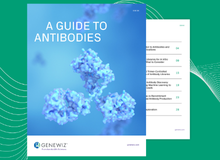
eBook | A Guide to Antibodies
Discover the latest advances in antibody discovery, engineering, and production in this comprehensive eBook. Explore antibody library design, trimer-controlled synthesis, machine learning–driven lead selection, and recombinant antibody production strategies to accelerate your research.
-
Application Note | Accelerating Recombinant Antibody Production
Recombinant antibody production is a cornerstone of modern biotechnology and research, but it faces the significant challenge of achieving high yields. In this application note, discover how to enhance expression efficiency while reducing production times with an optimized vector backbone workflow.